
Screen Printing: How It Works, Techniques, and Best Uses
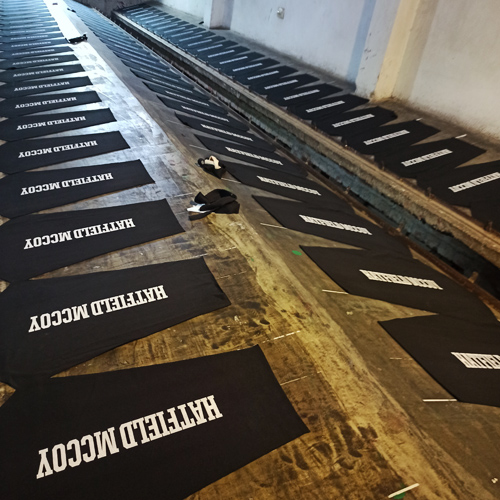
Screen printing works by pressing ink through a mesh stencil onto fabric, one color, one pass at a time. It’s one of the oldest printing methods still in wide use today, and it’s stuck around because it holds up, on cotton especially, ink applied this way tends to outlast a lot of newer printing techniques. It’s part of our full customization service, and usually the first recommendation we make for bulk, solid-color designs.
How Screen Printing Works
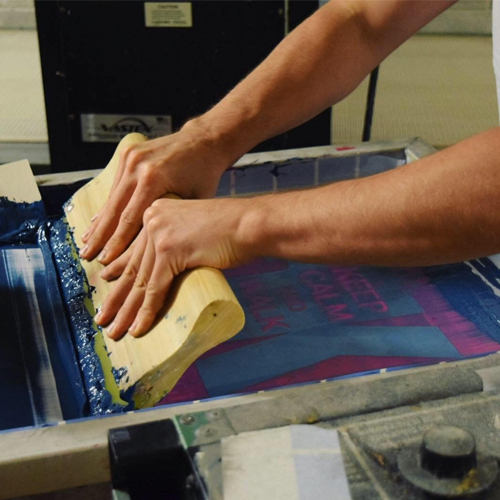
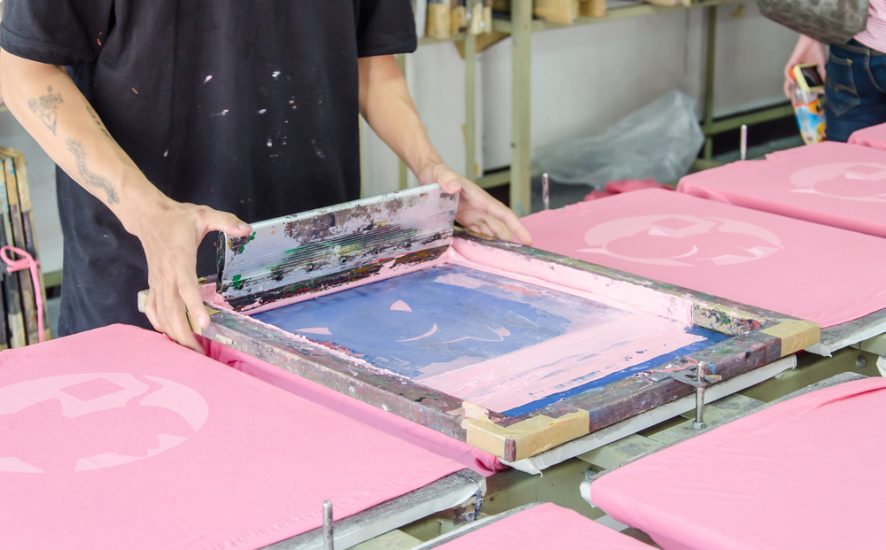
Each color in a design gets its own mesh screen, with a stencil blocking out everything except the area meant to be printed. Ink gets pushed through the open mesh with a squeegee, one screen per color, layered until the full design is built up on the fabric. More colors means more screens and more setup time, which is part of why screen printing works best for designs with a smaller, fixed color palette rather than complex, photo-realistic artwork.
Techniques We Offer
Traditional screen printing: The standard method, plastisol-based ink sitting on top of the fabric, known for strong opacity and vibrant color, especially on darker garments where other methods struggle.
Discharge printing: Instead of sitting on top of the fabric, discharge ink removes the existing dye from the fabric and replaces it with color, resulting in a softer, more breathable print that doesn’t have the slightly raised, plastic-like feel of traditional ink.
Water-based printing: A lighter-weight option that soaks into the fabric rather than sitting on the surface, giving a soft-hand finish that’s popular for premium apparel and fashion-forward brands that don’t want prints to feel heavy.

Where Screen Printing Works Best
Screen printing is the standard choice for:
- Bulk orders where per-unit cost matters, since cost drops significantly as quantity goes up
- Simple, one- to four-color logos and designs
- Cotton and cotton-blend garments like t-shirts and hoodies
- Designs that need strong, opaque color on dark fabric
For smaller orders or highly detailed, multi-color artwork, other methods like DTG or sublimation printing usually make more sense, since screen printing’s setup cost per color doesn’t pay off at low volume.
Ready to Screen Print Your Design?
Our team can help figure out which screen printing technique fits your fabric, color count, and order size. Get a quote for your screen printing order and we’ll walk you through the details.